on making things, notably movies
My life has always felt scattered. Maybe it was all the moving, or the constantly changing hobbies I picked up growing up. Today, I’m 21, a film school dropout, currently in business school, still trying to fit the puzzle pieces of my life together.
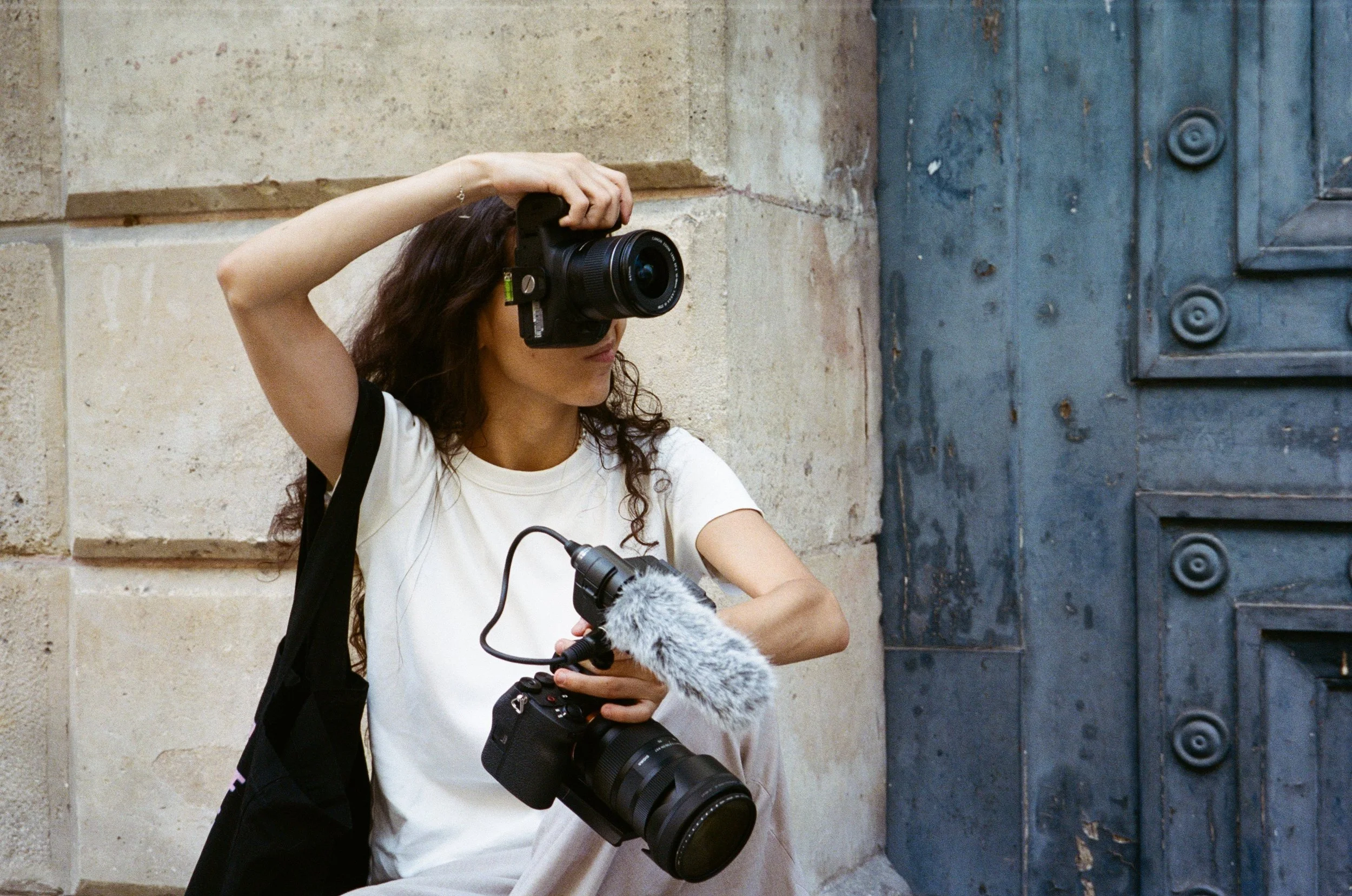
filming a creative project in the summer of 2025
Recently, I came across two pieces of writing that seemed to contradict each other. On the one hand, an article in The Atlantic challenges the idea that makers are inherently more valuable to society than people in support roles. On the other, The Artist’s Way takes a strong stance against what it calls “shadow artists,” people who work near artists, often in managerial or administrative positions, while secretly longing to create for themselves. Somewhere in the tension between those two ideas, I caught a glimpse of my own puzzle, or at least of what my life could add up to.
The first time I read The Artist’s Way was around this time last year. In the first week, Julia Cameron introduces the concept of shadow artists, people who orbit creative work without fully claiming their own creative identity. According to the book, artists often suppress themselves by choosing more rational, more socially acceptable versions of what they actually want. That idea landed uncomfortably close to home. I’ve often gravitated toward roles in creative agencies, thinking they were a reasonable compromise, only to grow frustrated when I realized I wasn’t working on my own ideas. The ones I keep carefully protected in notebooks, voice memos, and half finished scripts. but The Atlantic article offered a different perspective. It questioned why society tends to glorify makers while overlooking the people who support them. We name buildings after artists, inventors, and founders, but rarely after the therapists, teachers, or caregivers who helped those people live, learn and create. It also pointed out how gendered this hierarchy has historically been. Men were more often positioned as makers, while women were expected to take on support roles. The argument wasn’t that creation is unimportant, but that support roles are just as essential and deserve to be valued as such.
As an artist in business school, I’ve lived inside the uncertainty between these two ideas for a while. I constantly question whether the right move is to go all in on my art, or to prioritize my studies, internships, and practical experience. but for me, that tension started to disappear this semester after a particularly impactful financial analysis class. I was responsible for the valuation section of a group presentation, and I messed it up. really bad. My numbers were off by nearly 200%. Standing in front of the class, I felt challenged in a way I hadn’t since high school. But something strange happened afterward. Instead of shutting down, I felt energized. I wanted to understand exactly where I’d gone wrong. I went back through the model, corrected my mistakes, and slowly made sense of it. For the first time in a long time, i felt like i was actually learning something. Then, on a flight home from my exchange semester in Morocco, it clicked.
I don’t just want to make films. I want to learn how to valuate them, and help other artists share their message with the audience that needs it most.
I still want to write and direct, but imagining a life focused solely on making films feels incomplete to me. What feels right is the idea of working in a support role within the film industry, helping filmmakers pitch, finance, position, and market their projects. Understanding the business side not as a betrayal of creativity, but as a way to sustain it. And paradoxically, that realization brought me closer to believing that making my own films might actually be possible too.
Of course, I would be lying if I told you that I have found the truth. I haven’t. But what I did find is a hint that an in between position may exist, and that right now, I am willing to place my bets on that.
thanks for reading :)
-alex
